Emergency Dentistry
Emergency Dentist or A&E? Where to Go When a Tooth Goes Wrong


So a tooth has gone wrong, and now you're sitting there weighing up whether to head to A&E or find an emergency dentist. It's a completely fair question, and the honest answer is worth knowing before you spend half a night in the wrong waiting room.
Let's talk it through calmly, because most of the time this is far more sortable than it feels at 2am with your jaw throbbing. There are a couple of situations where A&E genuinely is the right door to walk through, and we'll be straight with you about those first. For everything else, and that covers nearly every tooth problem people have, there's a better place to go.
When A&E Really Is the Right Place
We'll say this plainly, because it matters more than anything else on this page. A few things are true emergencies for a hospital, not a dentist, and if any of them describe you, please go to A&E now or call 999.
The big one is swelling that starts to affect your breathing or your swallowing. When an infection spreads into the floor of the mouth or down toward the throat, it can begin to close the airway, and that is genuinely time-sensitive in a way a dental chair can't help with. The same goes for bleeding that simply will not stop no matter how long you press on it, and for a significant blow to the face, the kind that comes with a car accident, a bad fall, or a heavy knock that may have broken the jaw itself. Those are hospital situations, full stop, because a hospital has the surgeons and the scanners to deal with the whole picture, not just the tooth.
If that's you, stop reading and go. Everything below is for the far more common version of "something's gone wrong with my tooth," and we're glad to say that version has a much easier answer.
What Actually Happens at A&E With a Tooth
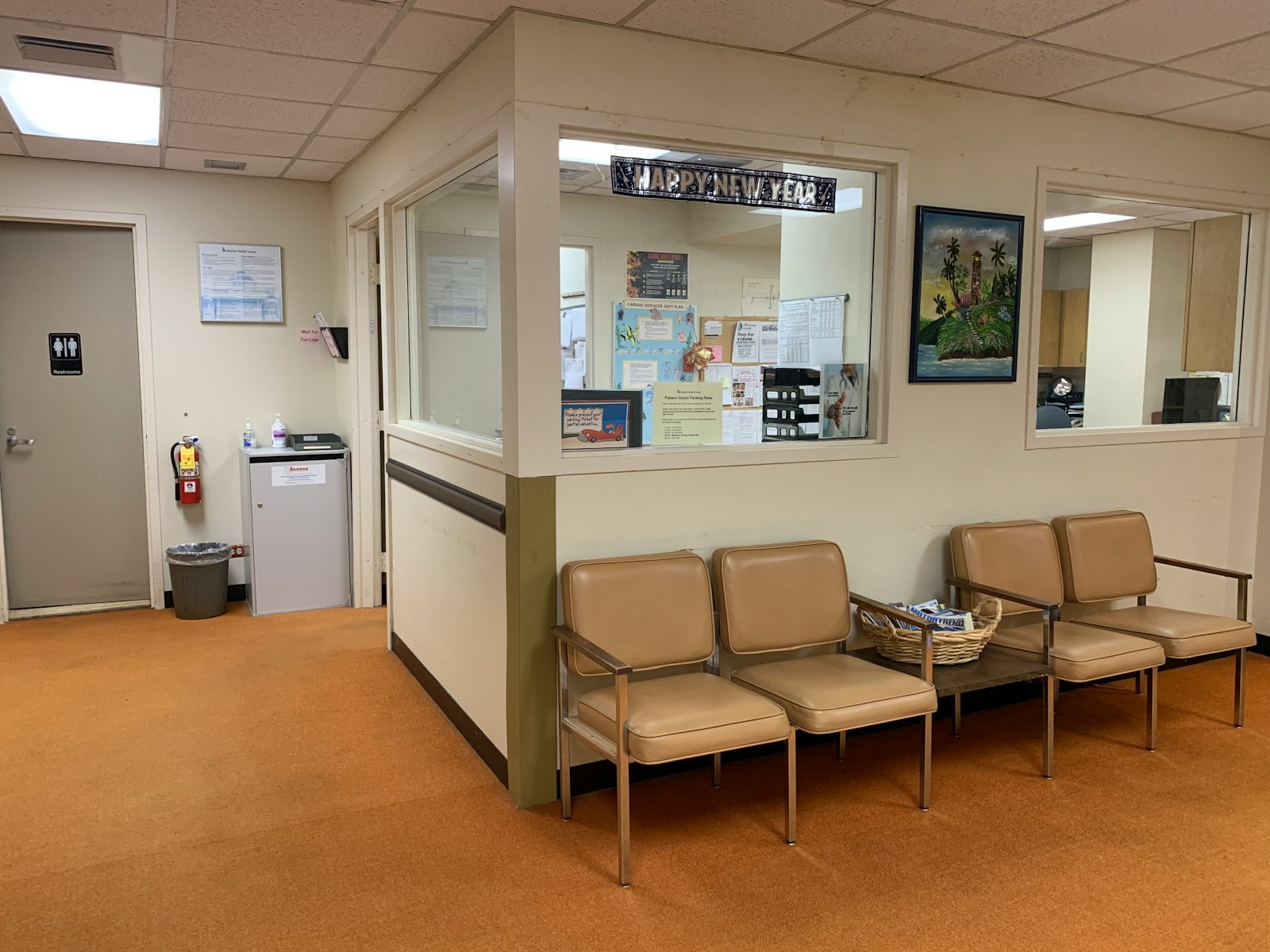
Here's the thing a lot of people don't realise until they're three hours into the waiting room chairs: hospitals don't have dentists. A&E is built for hearts, lungs, broken bones, and the sort of emergencies that put life at risk, so there simply isn't a dentist on the other side of those doors, nor a dental chair, nor the drills and instruments that dental work needs.
So what tends to happen is a long wait, and then a doctor who is kind and capable but not able to treat the tooth itself. They can check you over, they can give you something for the pain, and if there's an infection brewing they can often start you on antibiotics to hold it steady. Then, almost every time, the advice at the end is the same: "you'll need to see a dentist." Which is the bit that stings a little, because you've waited half the night to be told to do the thing you were already trying to do.
None of that is the hospital falling short. It's just that a cracked tooth, a raging cavity, a lost filling, or a tooth that's been knocked clean out needs a dentist's hands and a dentist's kit, and A&E was never the place that had those.
What an Emergency Dentist Does Differently
This is where it gets genuinely reassuring. An emergency dentist doesn't just quieten the pain and send you on your way; they actually find what's wrong and, where it's clinically possible, put it right in the very same visit.
That's the whole difference in one sentence. At UrgentCare Dental we're open 24/7, because teeth have a habit of going wrong at the least convenient hours, and it's £20 to be seen, with the X-rays included in that so we can see exactly what the tooth is doing under the surface. From there, where the situation allows, we treat it then and there rather than booking you back for another day. If the honest answer is a simple extraction, that starts from £149. If the tooth can be saved with a root canal, that starts from £399. Either way, you leave with the actual problem dealt with, not just a leaflet and a "see a dentist."
That's the part A&E can't offer and the part that matters most, because the pain you're feeling is coming from something real inside the tooth, and the only thing that truly ends it is treating that something.
A Quick Word on 111
If you're not sure how serious your situation is, calling 111 is a perfectly sensible middle step, and they'll point you toward urgent care or a dentist depending on what you describe. It's a helpful bit of triage when you're on the fence.
Just know that at the end of a dental problem, the route almost always leads back to a dentist's chair anyway, so if you already know it's a tooth and not one of the airway-or-bleeding situations up top, you can usually skip a step and go straight to a dentist who can actually do the treating.
How to Tell Which One You Need
Most of the time the honest read is simpler than the panic makes it feel. A tooth that hurts, a filling that's fallen out, a chip, a crack, an abscess that's uncomfortable but not spreading toward your eye or throat: these are all dentist jobs, and they're the sort of thing we see every single day.
If you'd like a calm, plain-English run-through of the common ones, we've put together a guide on what to do in a dental emergency that walks through each situation, the first steps to take right now, and the real cost to put it right. It also lays out the red flags clearly, so you can tell at a glance whether yours is a dentist question or a hospital one. Swelling is the one people worry about most, and there's a whole piece on a swollen face from a toothache that explains when it's the ordinary infection kind and when it's tipped into the go-now kind.
And if you're local and just want to be seen, our page for an emergency dentist in Leeds has the details for getting straight in.
Can I Go to A&E With a Tooth Problem?
You can, and for the serious airway, bleeding, or facial-trauma situations you absolutely should. For an ordinary painful tooth, though, A&E can only really offer painkillers, possibly antibiotics, and a referral onward, because there are no dentists there to treat the tooth itself. An emergency dentist is the one who can actually fix it, usually in the same visit, which is why for anything tooth-shaped it's the faster route to feeling better.
The Short Version
If it's your airway, heavy bleeding, or a serious injury to the face, A&E is the right place, and we'd send you there ourselves. For everything else, a genuine tooth problem, an emergency dentist is the one who can actually treat it, the same day, rather than passing you along.
That's the whole choice, really. A&E can look after you, but a dentist is the one who can fix the tooth, and when that's what's hurting, that's exactly where you want to be.
Toothache that won't quit? Seen today.
£20 books an emergency appointment, today. Your dentist gets to the root of it and treats it where clinically possible in the same chair. That is when the pain stops.
Or see every emergency treatment, with prices →