Dental Anxiety
Going to the Dentist After Years: What to Expect, What It Costs, and Why It's Easier Than You Think


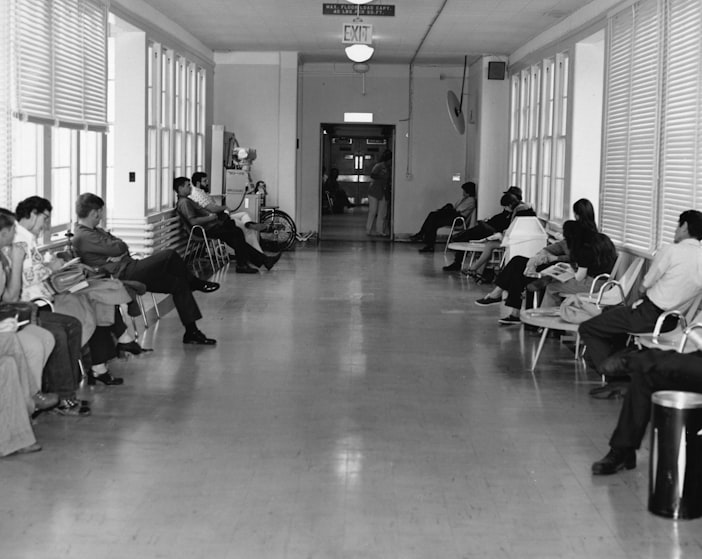
Five years, ten years, maybe more than twenty. Whatever your number is, here's the thing worth knowing before anything else: coming back is smaller, quieter and a great deal kinder than the version that's been playing in your head.
We meet people in exactly your position every single week, and the pattern almost never changes. The dread is enormous, the appointment is ordinary, and the sentence we hear most on the way out is some flavour of "was that it?" So let's take the whole journey out of the dark and lay it flat, because a thing you can see the shape of stops being frightening surprisingly fast.
Here's that shape in one breath. One appointment where a dentist looks properly and tells you exactly what's going on, with every price written down. Then, for most people, four or five appointments to get everything stable. Then a check-up twice a year while very little happens at all. That's the road, and the rest of this page walks you down it slowly.
Why Going Back to the Dentist Feels So Hard, and What Makes It Easy
Let's start where you are, because it's rarely the teeth that keep people at home.
It's the imagined face. The pause. The little sigh while somebody works out how to phrase something. We'd like to be really plain about this: that moment doesn't arrive. A mouth that's been left alone for a decade is one of the most ordinary things in dentistry, and the only thing a long gap tells a dentist is which questions to ask next. It reads as information, never as a verdict. If the shame is the bit standing in your way, we've written a whole page on what actually happens when you come in with teeth you're embarrassed about, because it deserves one.
The single most useful thing you can do costs nothing and takes one line: tell us when you book. Say you're nervous, say how long it's been, say what went wrong last time. That one sentence changes the appointment before you've even arrived, because it buys you unhurried time, a conversation before anybody picks anything up, and a pace set by you rather than by the clock. We've set out exactly what changes when you tell us you're scared, and none of it is complicated.
You can ask for a stop signal too. Plenty of people like the idea of a raised hand meaning pause, so if that would help you, say so at the start. You can ask to bring someone in with you. You can ask for a first visit that is only a look, with nothing done at all, and then go home and think about it, which is a completely normal thing to do. If the dread runs deeper than nerves, our guide to dental phobia goes further into what genuinely helps.
And if being awake for it is the real sticking point, there's a whole ladder of comfort to choose from. A light oral tablet takes the edge off. Inhalation sedation suits milder cases. At the top of the ladder, IV sedation with a dedicated sedation nurse leaves you awake but so deeply relaxed that most people remember none of it, from £249 an hour. You recover with us afterwards, so you bring someone along who can take you home. If you're weighing up which rung suits you, the sedation options compared puts them side by side, and what IV sedation actually feels like answers the question everybody really wants answered.
What Happens at Your First Dentist Visit After Years Away
The first visit back is a look, and nothing else is on the agenda unless you want it to be.
A first appointment at UrgentCare Dental is £20, and that buys you a proper examination, the digital X-rays where they're needed, and a plan with the prices written on it. A dentist checks your teeth, your gums, the soft tissue and any old work that's still in there, talking you through what they find as they find it, so nothing is saved up for a verdict at the end. You walk out knowing where you stand, which is the whole point of the visit.
Think of it the way you'd think about taking a car in when the noise has been there a while. Nobody touches a spanner until you've seen the list, seen the prices, and said yes. If treatment is needed you get the price for it in writing first, and nothing extra gets added on afterwards. If you'd like something sorted the same visit, that can often happen. If you'd rather go away and sit with it, that costs you nothing at all.
The X-rays do a lot of the heavy lifting here, because so much of what matters sits where nobody can see it: between the teeth, underneath old fillings, around the roots. They're how "that one looks a bit grey" turns into a straight answer with a price next to it.
Booking is deliberately easy, because the moment of nerve is usually a short one and it helps to be able to act while it lasts. The phones are answered around the clock, the chairs run evenings, weekends and bank holidays, same-day slots are usually there, and the booking page is open whenever you are, three in the morning included, which is when plenty of people finally do it. If the timing has been your obstacle, we've written about same-day appointments and being open evenings and weekends. And if you'd like the appointment narrated properly before you sit in it, here's what a check-up involves, minute by minute.
What Dentists Usually Find After a Long Gap
Almost always less than you fear, and almost always more fixable than you've imagined.
The most common finding by a distance is gum trouble, because gums are the quiet ones. Plaque hardens into tartar within a couple of days, the way limescale builds up inside a kettle, and once it's hard no toothbrush on earth is going to shift it. The early stage is gingivitis: gums that bleed a little, look pink and puffy, and don't hurt at all. It's fully reversible with a professional clean and decent home care, which is honestly the best sentence in this whole article. Left longer it turns into periodontitis, where the inflammation works below the gum line and the bone around the roots starts giving ground. That part can't be undone, though it can absolutely be stopped and held steady, which is why dentists say gum disease is managed rather than cured. If your gums bleed when you brush, here's why they do that and why it settles. If one is sore and swollen today, that's usually a simple thing to settle too, and it is worth coming in that day instead of waiting it out.
Then there's decay. Cavities grow slowly, so years without check-ups mean a few that would have been tiny have had time to grow into something medium sized. Most are still a straightforward filling at £149 to £349. The bigger ones want a crown from £650, which caps what's left of the tooth so it can take your bite again instead of cracking under it. Now and then decay has reached the nerve, and the answer there is root canal treatment to save the tooth or an extraction if keeping it would be the unkinder option. We've mapped out the stages of decay and the repair at each one so you can see roughly where any particular tooth of yours might sit.
Old fillings turn up as well, quietly reaching the end of their working lives, and replacing them is routine rather than bad news, because fillings simply don't last forever. Dark patches come up a lot too, and they're usually four very ordinary things wearing the same coat: surface staining, tartar, decay, or a tooth that has died and changed colour from the inside.
And then the big one, the fear nearly everybody arrives carrying: that it all has to come out. It very rarely does. Far more typical is that most of your teeth are fine or want small work, and one or two need something more involved. Whether a rotten tooth can be saved is a tooth-by-tooth question rather than a whole-mouth one, and the X-rays answer it on the day. Where a tooth genuinely can't be kept, there are several good ways to replace it, and nobody is going to hurry you into picking one.
There's one more group worth mentioning, because they're a pleasure to meet: the people who have dreaded this for a decade, walked in braced for a disaster, and turned out to be largely fine. Genetics, diet and habits all play their part, and some mouths are simply more forgiving than others. It happens far more often than you'd think.
Your Treatment Plan: Usually Four or Five Appointments to a Stable Mouth
Once the picture is complete it turns into a plan, and that plan has an order, and the order is never accidental.
Anything hurting or infected goes first, because pain and infection are the two things that get worse on their own while you think about it. Then the gums: the clean, and deep cleaning where the pockets call for it. Then the repairs, the fillings and crowns and anything that needs rebuilding. Then a look back over the lot to check it has all settled the way it should. For most people that comes to four or five appointments in total, spread across weeks or months at whatever pace suits your diary and your budget, and at the end of it your mouth is stable: nothing hurting, nothing infected, nothing quietly getting worse in the background. We've given the stabilisation plan a page of its own, because it's the backbone of everything on this one.
It's a little like taking on a house that's stood empty a while. The leak gets fixed first, because everything else is pointless while water is still coming in. Then the damp. Then the decorating, once the structure underneath is sound. Nobody sensible starts with the curtains.
Plenty of people meet us the other way round, of course, arriving at two in the morning with a tooth that has finally had enough. That's fine, and it's the same road entered through a different gate. The pain gets dealt with that visit, and then what happens next is exactly this plan, built out of whatever the X-rays showed while you were there. The follow-up appointments after treatment don't cost you anything either, because checking a thing has healed the way it should is part of doing the job properly.
Anything cosmetic sits right at the back of the queue, and only if you want it at all. It'll wait as long as you like.
What It Costs to Go Back to the Dentist
The honest answer is that it depends entirely on what's in there, which is precisely what that first appointment is for, so rather than guess at yours here, we have put the real numbers and some worked examples on their own page.
What we can tell you is how the money behaves. Every price is published on our website before you book anything, and the figure you're quoted after the examination is the figure you pay, agreed in writing before any treatment starts. If you want to know how that compares with the rest of the country, here is what a private check-up costs around the UK, and where ours sits in it.
If the total is more than you'd want to hand over in one go, treatment over £500 is eligible for 0% finance over 12 months, and longer terms of up to 60 months at 12.9% APR representative are available on any amount, with no minimum. It's quoted at the consultation, and there's no pressure whatsoever to take it. Our guide to dental finance explains how the options work, and if money is the real reason you've stayed away, here's what to do when you can't afford the dentist.
The First Clean After Years, and Why It's the Turning Point
The first hygiene appointment after a long gap is a bigger job than a routine polish, and it's also the visit people tend to notice most.
Tartar collects along the gum line and on the inside surfaces of the lower front teeth, where the saliva glands sit and the minerals in saliva set soft plaque hard remarkably fast. An ultrasonic scaler, which vibrates and sprays water, breaks the deposits up, and hand instruments finish off the detail. A standard clean is £100. Where the gum pockets have gone deeper, a deep clean reaches below the gum line and is done numbed first, £150 to £180, usually across a visit or two.
Your gums will probably bleed while it's happening, and that's the inflammation showing itself rather than the treatment doing harm. Picture a splinter in a finger: the redness around it is the finger objecting to the splinter, and it calms down once the splinter is out. Give it a few days and the bleeding quietens. Your teeth will feel smoother afterwards, sometimes slightly gappy where tartar had been sitting in the spaces, and your gums may be tender for a day or two. Within a week they usually look visibly better. Here's the whole appointment described beat by beat if you'd like to picture it first, and what hygienists charge around the UK if you're comparing.
Life After: Two Check-Ups a Year and Not Much Else
Here's the part nobody pictures while they're dreading the phone call. The ending is boring, and boring is the entire prize.
Once your mouth is stable, six-monthly check-ups and hygiene visits keep it that way, which is the cheapest dentistry there is, because everything gets caught while it's still small enough to be cheap. Gum disease that's been treated usually wants a shorter cycle at first, around every three months, easing off as things stabilise. How often you need to go has the reasoning behind those numbers.
If you'd rather not think about booking it each time, our care plans start at £19.99 a month and cover two exams and two cleans a year, priority if something does go wrong, and money off anything extra you need. Dr Zain Chishty, our Clinical Director, puts it plainly on that page: the plan patients are the ones we rarely see in pain. If you're weighing plans up properly, here's what £19.99 a month buys you, and how a practice plan compares with Denplan.
Questions People Ask Before Booking That First Appointment
Will the dentist judge me for not going in years?
No, and we'd like to say that as flatly as we can. Patients who have been away for ten or twenty years are part of every ordinary working week in this practice, so a long gap is familiar rather than shocking, and there's no lecture waiting at the end of it. The gap gets noted because it helps a dentist understand what they're looking at, the same way a mechanic asks when the car was last serviced. So what you'll meet is curiosity about your mouth and nothing else, which is a far duller reception than the one you've been picturing, and a much better one.
What happens at a first dental appointment after years away?
A dentist looks, and that's the whole appointment unless you decide otherwise. A first appointment with us is £20, which covers the examination, the digital X-rays where they're needed, and a plan with every price on it, all of it in writing before a single thing is done. You'll be shown what's going on while it's being found, so nothing is held back for a verdict at the end. Nothing gets treated on the day unless that's what you'd like.
How many appointments will it take to fix everything?
For most people, four or five. The order follows urgency: whatever hurts or is infected comes first, then the cleaning and any gum treatment, then the fillings and the larger repairs, then a check that everything has settled properly. Those appointments can be spread over weeks or months to suit your budget and your diary, and at the end of them the aim is a mouth where nothing hurts, nothing is infected, and nothing is getting worse out of sight.
Will all my teeth have to be taken out?
Almost certainly not, and this is the fear we spend the most time gently putting down. The far more usual picture after years without a dentist is that most teeth are fine or want small work, some need fillings, and one or two need something bigger like a crown or a root canal. Whether an individual tooth can be saved is answered by the X-rays on the day rather than by how bad things feel, and where one can't be kept, there are good ways to replace it.
Can I be sedated for my first appointment back?
Yes, and lots of people are. The options run from a light oral tablet to take the edge off, through inhalation sedation for milder nerves, up to IV sedation with a dedicated sedation nurse from £249 an hour, where you're awake but so relaxed that most people remember none of it. With IV sedation you recover with us afterwards and bring someone along to take you home. Mention it when you book and it gets planned in from the start.
How much does it cost to go back to the dentist?
The first appointment is £20 with digital X-rays included, and everything after that depends on what the examination finds, priced in writing before you say yes to any of it. A standard clean is £100, fillings run £149 to £349, and the whole price list is published, so nothing arrives as a surprise. Treatment over £500 is eligible for 0% finance over 12 months, with longer terms of up to 60 months at 12.9% APR representative available on any amount.
Come In and Let's Just Have a Look
The hardest appointment is the first one, and it stops being hard the moment it's behind you. Everything after that is just appointments, and most people find the second one barely registers as an event at all, because the unknown has been replaced by a plan with your name on it.
You'll find us at our flagship in Armley, Leeds, in Manchester, and on Main Street in Bingley for Bradford, all open around the clock. Book online whenever the moment strikes you, or give us a ring and talk it through first if that feels easier. Tell us it's been a while. We'll take it from there, at your pace, and you can read more about who we are while you decide.
And if you'd like all of this on one page, with the booking buttons where you can find them, it lives on our new patients page.
Need Emergency Dental Care?
Same-day appointments from just £20. Open 24 hours, 7 days a week.
Or see every treatment we offer, with prices →