Root Canal
How Long Does a Root Canal Last? What 46,000 Patients Tell Us


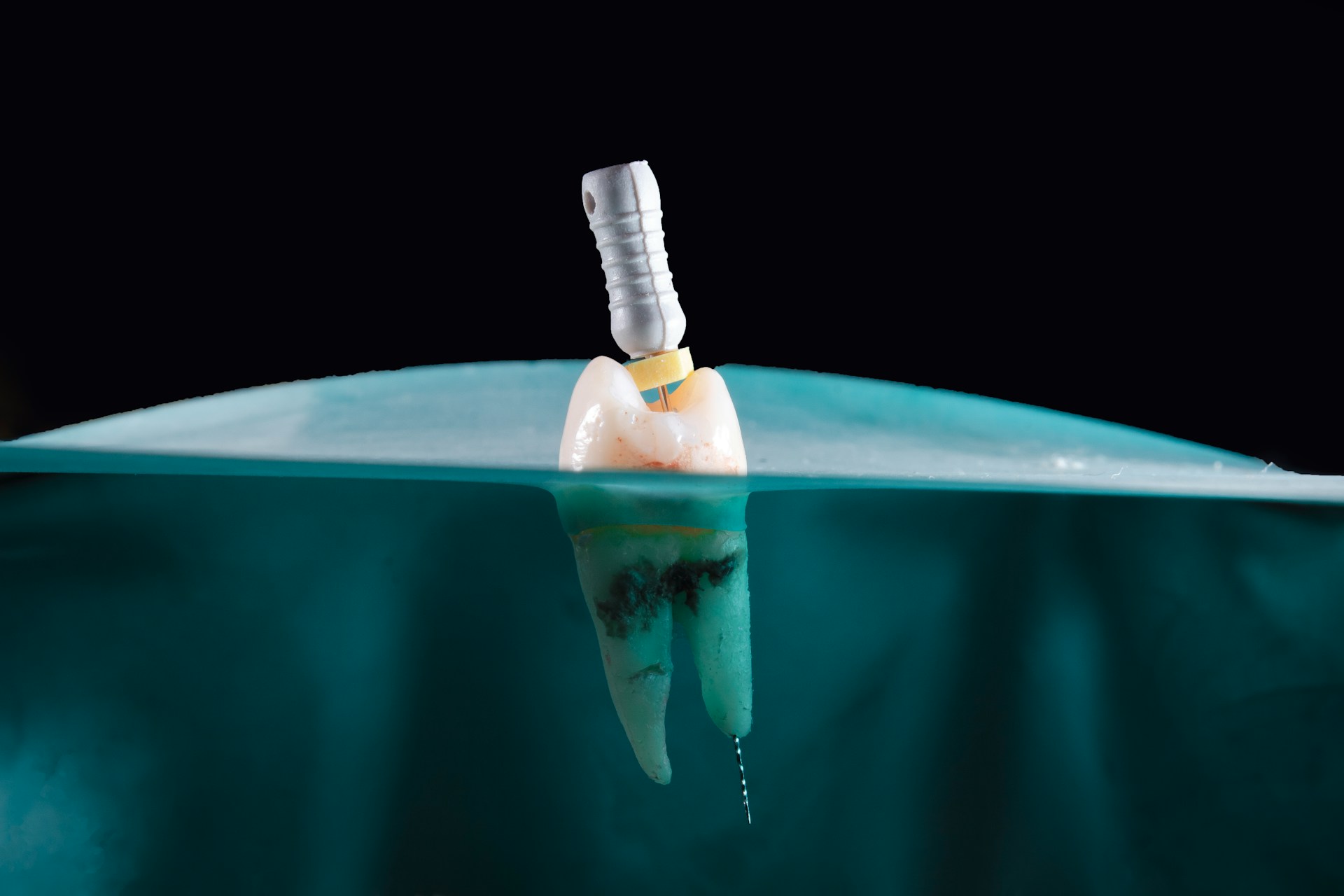
You've just paid (or are about to pay) somewhere between £600 and £1,400 for a root canal. The obvious question: how long is this actually going to last?
The answer ranges from 6 years to 20+ years. The difference comes down to one decision you make after treatment.
The short answer: a root canal usually lasts around 10 to 20 years, and often a lifetime when the tooth is capped with a crown to protect it. Left without proper restoration, a root canal treated tooth tends to fail within about 6 years, so what you do after the treatment matters more for how long it lasts than almost anything else.
What the Largest Study Found
In 2022, researchers from the Regenstrief Institute and Indiana University published the first large-scale analysis of root canal longevity from community dental practices. They looked at over 46,000 patients and 71,000 root canal treated teeth.
The median survival time was 11.1 years. But that average hides enormous variation based on what happened after treatment.
Here's what they found:
| Restoration After Root Canal | Median Survival Time |
|---|---|
| Filling + Crown | 20.1 years |
| Crown only | 11.4 years |
| Filling only | 11.2 years |
| No restoration | 6.5 years |
The difference between getting proper restoration and skipping it entirely is roughly three times the lifespan of your treated tooth.
Why the Crown Matters So Much
A root canal removes the infected pulp from inside your tooth. The procedure saves the tooth from extraction, but it also leaves the tooth structurally weaker. The internal chamber has been hollowed out, cleaned, and filled with a rubber-like material called gutta-percha.
Without a crown to protect it, that weakened tooth is vulnerable to fracture under normal chewing forces.
A study published in the Journal of Prosthetic Dentistry tracked molars without crown coverage and found survival rates of 96% at one year, 88% at two years, and just 36% at five years.
More than half of root canal treated molars without crowns failed within five years.
The British Dental Journal research examining over 538,000 restorations confirmed this pattern. Teeth restored with crowns during the same course of treatment as the root canal had significantly longer times before needing further intervention than those restored with fillings alone.
Front Teeth vs Back Teeth
The crown question isn't identical for every tooth.
Front teeth (incisors and canines) experience less biting force and have simpler root structures. The Regenstrief study found anterior teeth had a median survival of 12.4 years compared to 10.3 years for premolars.
A 37-year retrospective study tracking 598 root canal treated teeth found cumulative survival rates of 97% at 10 years, 81% at 20 years, 76% at 30 years, and 68% at 37 years. The researchers identified three factors most associated with tooth extraction: deep periodontal pockets, pre-operative periapical lesions, and lack of occlusal protection.
The lack of occlusal protection, meaning no crown or night guard, was a significant predictor of failure even in otherwise successful treatments.
For molars specifically, the evidence is unambiguous. The chewing forces on back teeth are substantial, and root canal treated molars without crowns fracture at rates that make the additional investment in a crown essentially mandatory if you want the tooth to last.
Success Rate vs Survival Rate
These are different measurements, and understanding the distinction matters.
Success rate refers to whether the root canal actually eliminated the infection. By this measure, root canal treatment performs well. The British Endodontic Society notes success rates of 85-97% for primary treatment.
Survival rate refers to whether the tooth is still in your mouth and functional. This is affected by factors beyond the root canal itself, including subsequent decay, gum disease, and fracture.
A root canal can be completely successful at eliminating infection but still result in tooth loss years later if the tooth fractures because it wasn't crowned.
What Causes Root Canals to Fail
When root canals do fail, the research points to a few common reasons.
Missed canals are a big one, particularly in molars. Teeth can have complex anatomy with additional canals that weren't found during the initial treatment. This is one reason why specialist endodontists tend to have higher success rates: they're hunting for these with microscopes and advanced imaging.
Coronal leakage is another. This happens when bacteria find their way back into the root canal system through a failed or inadequate restoration. It's why getting proper restoration matters, and why getting it done promptly matters too.
And then there's fracture, particularly in back teeth that weren't crowned. Many otherwise successful root canals end this way. The treatment worked perfectly, but the tooth cracked under normal chewing forces because it wasn't protected.
The British Dental Journal study on molar root canals found something striking: most failures happen within the first two years (62.5% of failures in that study). But here's the encouraging part: none of the teeth restored with crowns failed during the follow-up period. Not one.
The Real Cost Calculation
A crown typically adds £500-1,000 to your root canal treatment. On top of what you've already paid, that can feel like a stretch.
But it's worth thinking about what happens down the line without one.
Without a crown, you're looking at roughly 6-11 years before the tooth likely fails. With a crown, many teeth last 20+ years. When a root canal treated tooth does fail, you're facing extraction and then a choice between leaving a gap, getting a bridge, or getting an implant. A single tooth implant runs £2,000-3,000 in the UK. Bridges aren't far behind and involve preparing the teeth either side.
Seen that way, the crown isn't really an extra cost. It's the difference between your root canal being a short-term fix and a long-term solution.
What This Means for Your Decision
Your dentist will almost certainly recommend a crown after root canal treatment, especially for back teeth. The research strongly supports this, and it's worth taking seriously.
Sometimes the cost feels like a lot on top of what you've already paid. That's understandable. But think of the crown as completing the job rather than an optional add-on. The root canal dealt with the infection - the crown makes sure that work actually lasts.
For front teeth with minimal structural damage, the picture is a bit different. There's more flexibility here, and your dentist can assess whether a filling provides enough protection based on how much healthy tooth structure remains.
The data is clear on one point: the investment you make in restoring the tooth properly after root canal treatment has more impact on longevity than almost any other factor. A well-executed root canal followed by proper restoration can last decades. The same procedure without adequate restoration may not make it to five years.
The choice is yours, but now you know what the numbers actually say.
If Something Feels Off Later
Most root canals settle down within a few days and then you forget the tooth was ever a problem. That's the goal.
If pain returns months or years later, particularly when biting down, or if you notice swelling in the gum near the treated tooth, it's worth getting it looked at. Sometimes a small bump appears on the gum that comes and goes - this can be the body's way of draining a low-grade reinfection.
The good news is that catching problems early often means retreatment is possible rather than extraction. Success rates for retreatment sit around 78%, which is lower than primary treatment but still gives the tooth a reasonable chance. Far better than jumping straight to implants.
Common Questions About Root Canals
What happens 10 years after a root canal?
For most people, not a lot, and that's rather the point. The largest study of its kind found a median survival of 11.1 years, so at the ten-year mark the majority of treated teeth are still quietly getting on with the job. A separate 37-year study had 97% of teeth still surviving at 10 years and 81% at 20 years, with the crowned ones faring best of all. The tooth you stopped thinking about years ago is usually the one doing perfectly fine.
What are the signs of a failing root canal?
The tooth tends to let you know. The usual signals are pain when you bite down, tenderness or swelling in the gum near the treated tooth, and sometimes a small bump on the gum that comes and goes as it quietly drains a low-grade reinfection. None of these mean the tooth is lost: caught early, retreatment is often possible rather than extraction. So if a tooth that had happily settled suddenly starts speaking up again, treat that as your cue to get it looked at rather than something to worry about.
How often do root canals need to be redone?
Not often, happily. Most root canals do their job and never need revisiting. When one does flare up, the fix is usually retreatment (going back in to clean and reseal the canals) rather than losing the tooth, and that retreatment works around 78% of the time. It's a slightly lower success rate than a first-time root canal, but still a very reasonable second chance, and a far gentler road than going straight to an implant.
What is the downside of a root canal?
The main one is that the tooth comes out a little weaker than it went in. Clearing the infection means hollowing out the inside of the tooth, which leaves it more prone to fracture until a crown caps and protects it, and that's why the crown keeps coming up throughout this piece. There's also a small chance of reinfection if bacteria find their way back in through a worn filling or crown over the years. Set against the alternative of losing the tooth altogether, most people find those trade-offs very much worth making.
The Bottom Line
The research from over 46,000 patients makes the pattern clear: a root canal followed by proper restoration can last two decades or more. The treatment eliminates the infection. The crown protects that investment for the long term.
Want the real number for your case?
An article can only give you a range. The £20 appointment gets you a fixed quote from a dentist who has actually looked. Extractions from £199, implants £1,999, and 0% finance on treatments over £500.
Or see every price on one page →