Dental Implants
How Long Do Dental Implants Last


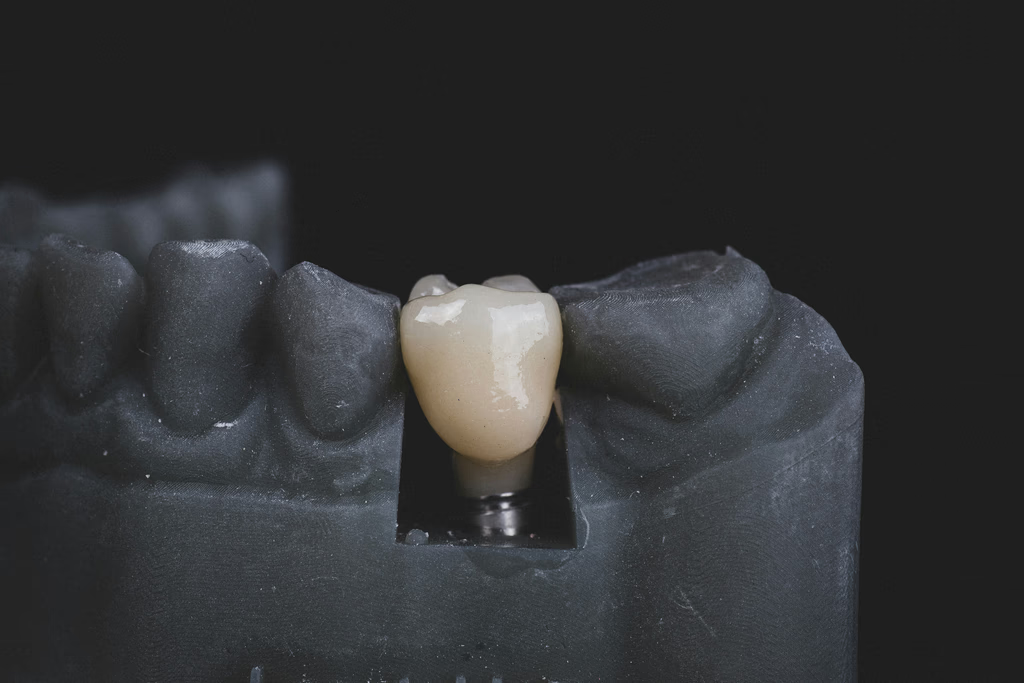
The short answer: the titanium post that anchors into your jaw can last 20 to 30 years, often a lifetime, while the crown that sits on top usually needs replacing every 10 to 15 years from everyday wear. So implants last longest when you treat the post as permanent and the crown as the part you'll swap once or twice along the way.
Here's something most people don't realise when they're sitting in that consultation chair, nodding along as the dentist talks about "permanent solution" and "lifetime investment": dental implants aren't one thing. They're two things pretending to be one.
The titanium post that gets screwed into your jawbone? That can genuinely last the rest of your life. Thirty years, forty years, maybe longer. The crown sitting on top of it? Ten to fifteen years, maybe twenty if you're lucky and careful.
This distinction matters immensely when you're trying to figure out if the £2,000 to £3,000 per tooth makes sense. Because what you're really buying isn't a permanent tooth. You're buying a permanent foundation with a replaceable top.
The numbers tell an interesting story. Research shows 95% to 98% of implants still working after a decade. That's remarkably high for something we're jamming into bone and expecting to fuse. But here's where it gets curious: that figure drops to around 75% at the twenty-year mark. Not because the titanium fails, but because life happens. Gums recede, bones change, people stop caring, dentists retire.
So when someone asks how long dental implants last, the honest answer is: it depends which part you're talking about, and what you mean by "last."
The Data Worth Knowing
A systematic review tracking thousands of implants found 96.4% still functional after ten years. These aren't cherry-picked success stories from prestigious university clinics. This includes regular dental practices across the UK, treating ordinary patients with ordinary problems.
Worldwide data shows 95% of all dental implants lasting for fifteen years. That fifteen-year mark seems to be where things start getting more variable. Some studies report 75% success at twenty years, though this depends heavily on individual circumstances.
What's interesting is that the implant post itself rarely fails once it's successfully integrated. When implants "fail" after many years, it's usually not the titanium giving up. It's the surrounding environment that changes.
Why the Two-Part System Matters
The post does one job: anchor into your jawbone and stay there. Once osseointegration happens (that's the process where bone actually grows around and fuses with the titanium), this component becomes remarkably stable. Barring infection or significant trauma, it's in there for good.
The crown does a completely different job: look like a tooth, feel like a tooth, handle the daily grind of chewing. This is the part that takes the punishment. Every meal, every accidental bit down on something hard, every time you forget and use your teeth to open something.
Think of it like a house. The foundation can last centuries if it's built right. The roof needs replacing every couple of decades. Same principle here.
Crowns are typically made from porcelain or zirconia, materials chosen for their resemblance to natural teeth rather than pure durability. They wear down, they stain, tiny chips accumulate. After ten to fifteen years, most people need the crown replaced. Not because anything went wrong. Just because that's how long crowns last under normal use.
What Actually Determines Longevity
A handful of things decide whether an implant reaches its fifteenth year or its thirtieth, and most of them sit more in your hands than you'd expect. Here's the quick view before we walk through each one:
| Factor | Effect on longevity |
|---|---|
| Oral hygiene and check-ups | The main day-to-day lever. Neglect invites peri-implantitis, and bone loss follows close behind. |
| Smoking | Tied to around 37% of implant failures, the single biggest risk factor of them all. |
| Bone quality | Roughly 20% failure in soft Type IV bone, against under 1% in dense Type I. |
| Position in the mouth | Molars wear the crown faster than front teeth do. |
| Surgeon experience | Failure rates fall as the number of implants a dentist has placed rises. |
| General health | Diabetes and immune conditions raise the risk of infection and slower healing. |
The quality of your jawbone matters right from the start. Dentists classify bone into four types, with Type IV being the softest. Studies show failure rates around 20% with Type IV bone, compared to under 1% with Type I (the densest bone). If your bone quality isn't ideal, bone grafting might come up in conversation before implant placement.
Here's the part nobody wants to hear: smoking is catastrophic for implant longevity. Research shows smoking associated with 37% of implant failures, far higher than any other single factor. Nicotine reduces blood flow to the gums, which means worse healing and worse integration. Some dentists won't even place implants in heavy smokers, knowing the odds.
Your daily habits determine whether implants reach fifteen years or thirty. The same care natural teeth need applies here. Brush twice daily, clean between teeth, show up for check-ups. Skip these and you're inviting peri-implantitis, which is essentially gum disease around an implant. Once that starts, bone loss follows, and suddenly that "permanent" solution isn't looking so permanent.
Medical conditions complicate the picture. Diabetes and compromised immune systems increase rejection risk and infection probability. Even depression has been identified as a risk factor, likely because it affects overall health and healing. These aren't absolute contraindications, but they do lower the odds.
Position matters more than you'd think. Implants in the front of your mouth face less pressure than those in the back. Molars do heavy lifting every time you eat, which means both the implant and especially the crown wear faster. Front teeth might last twenty years before needing crown replacement. Back teeth might need it at ten.
The Experience Question
Here's something worth knowing: research shows surgical experience significantly affects failure rates, specifically measured by how many implants a dentist has placed over their career. Not their years in practice, not their qualifications, but the actual number of implants they've put in people's mouths.
In the UK, you can verify specialist qualifications through the General Dental Council's lists for periodontics, prosthodontics, and oral surgery. This doesn't mean only specialists can place implants successfully. Plenty of general dentists do excellent work. But experience matters, and it's worth asking your dentist directly: how many of these have you done?
The uncomfortable truth is that implant placement involves a learning curve, and somebody has to be on the early part of that curve for every dentist. There's no judgment in wanting to be treated by someone past that point.
When Things Start Going Wrong
Most problems announce themselves early. Persistent pain beyond the normal healing period means something's not integrating properly. Swelling that doesn't subside, any sensation of movement or looseness, these all warrant immediate attention.
Peri-implantitis is the main long-term threat. It's inflammation and infection around the implant, caused by bacteria building up just like they do around natural teeth. Left untreated, it causes bone loss, and once enough bone is gone, the implant can't stay anchored. Regular dental visits catch this early, when it's still manageable.
The good news is that minor issues rarely mean implant removal. A damaged crown can often be repaired or replaced without touching the post underneath. Early-stage peri-implantitis responds to treatment. Catching problems early makes the difference between a minor fix and starting over.
The Maintenance Reality
Keeping implants functioning long-term isn't complicated. It's just consistent. Same routine as natural teeth: brush thoroughly twice a day, clean between teeth daily, show up for check-ups twice a year.
If you grind your teeth at night, a night guard becomes essential. The forces from bruxism can crack crowns, loosen implants, cause bone loss. Most people don't know they grind until a dentist points out the wear patterns. Once you know, protecting the implant becomes straightforward.
Some habits shorten lifespan predictably. Using your teeth to open packaging or tear things puts stress on crowns they're not designed to handle. It's the kind of thing that seems harmless until suddenly you've got a £500 crown replacement to pay for.
Comparing Your Options
Dentures need replacing every five to eight years. They shift as your jaw changes shape, require adhesives, limit what you can eat comfortably. The initial cost is lower, but the ongoing replacement and adjustment costs accumulate.
Bridges last ten to fifteen years but depend on the teeth either side for support. If one of those supporting teeth develops problems, the entire bridge can be compromised. You're also grinding down healthy teeth to anchor the bridge, which some people aren't comfortable with.
Implants stand alone. They don't rely on neighbouring teeth, don't shift around, don't limit your diet. The upfront cost is higher, often significantly so. But over twenty or thirty years, the math changes when you factor in fewer replacements and less ongoing maintenance.
What Happens Beyond Fifteen Years
Here's where the data gets thinner. Most studies follow implants for ten years, some for fifteen, very few beyond that. One large-scale study tracked 10,871 implants for up to 22 years, which is about as long-term as the research gets.
What that study showed is that implants can indeed function well into their third decade with proper care. But it also showed increased failure rates as implants age, particularly in older patients. Someone who gets an implant at 45 has different odds than someone getting one at 65.
Age at placement influences outcomes. Patients 65 and older show success rates around 91.5% over ten years, compared to 96% for younger patients. Still excellent odds, but the difference matters when planning long-term.
The reality is that very few implants make it to thirty or forty years, not necessarily because they fail mechanically, but because life intervenes. People age, health conditions develop, oral hygiene declines, priorities shift.
Common Questions About Implant Longevity
What happens to dental implants after 20 years?
By the twenty-year mark, most of the original titanium posts are still quietly doing their job, because once bone has fused around a post it very rarely gives up. Studies put survival at around 75% at twenty years, and the failures that do show up usually come from the environment around the implant changing (gums receding, bone thinning, hygiene slipping over the decades) rather than the metal itself wearing out. The crown on top, though, will almost certainly have been swapped once or twice by then, since crowns tend to last ten to fifteen years before they need replacing.
What are the downfalls of dental implants?
The honest ones are cost and time. You're looking at £2,000 to £3,000 per tooth, and the full journey from placement to final crown can take several months while the bone fuses around the post. Beyond that, they aren't quite fit-and-forget: the crown needs replacing every decade or so, smokers and people with conditions like diabetes face higher failure rates, and skipping check-ups invites peri-implantitis (gum disease around the implant) that can slowly undo the whole thing.
What is the most common cause of dental implant failure?
Poor gum and bone health around the implant, which nearly always means peri-implantitis. It's an infection that builds up when bacteria are left to gather around the implant, just as they would around a natural tooth, and left alone it eats away the very bone the implant depends on to stay anchored. Smoking is the single biggest risk factor tied to failure (linked to around 37% of cases), because it starves the gums of blood flow and slows healing right when the implant needs it most.
What does no one tell you about dental implants?
That an implant is really two separate things with two different lifespans: a near-permanent foundation and a replaceable top. Most people walk into that consultation picturing one lifelong tooth, so it genuinely helps to know upfront that the crown is a wear-and-tear part you'll budget to swap every ten to fifteen years, while the post underneath quietly stays put for decades. Knowing that split early changes how you plan for the cost across the years.
What This Actually Means for You
If you're considering dental implants, here's what you're looking at: the titanium post can potentially last your lifetime. The crown on top needs replacing every ten to fifteen years, sometimes longer. Total lifespan typically ranges from fifteen to twenty-five years before major intervention becomes necessary.
Success depends largely on factors within your control. Maintain rigorous oral hygiene, attend regular check-ups, don't smoke, protect the implant from excessive force. Choose an experienced practitioner, follow post-operative instructions carefully, and treat the implant exactly as you would a natural tooth.
The investment makes sense for most people when viewed over decades rather than years. But it's worth going in with realistic expectations about what "permanent" actually means in dental terms. Nothing lasts forever, but with proper care, dental implants can last long enough that it stops mattering.
If you're weighing it up, the simplest first step is getting the tooth and the bone looked at properly. At UrgentCare Dental that initial assessment is £20, and you walk out with a clear plan and a firm price, so you can make the call with the real numbers in front of you.
Want the real number for your case?
An article can only give you a range. The £20 appointment gets you a fixed quote from a dentist who has actually looked. Extractions from £199, implants £1,999, and 0% finance on treatments over £500.
Or see every price on one page →