Dental Implants
Cheapest Dental Implants UK 2027: From £1,500 a Tooth

Somebody quoted you a number for a dental implant, it felt high, and now you're hunting for the cheapest one in the country. Fair enough, so let's answer that properly, because "cheapest" turns out to mean two very different things.
The lowest headline prices advertised in the UK sit around £995 to £1,250, and those are usually for the implant on its own. A complete single tooth realistically starts at about £1,500, and most quotes land somewhere between £2,200 and £2,500. At UrgentCare Dental, a single implant is £1,999, with the 3D scan, a custom abutment, the porcelain or zirconium crown and every follow-up included.
That last sentence is the whole story, really. A dental implant is three parts doing the job of one tooth: a small titanium root that goes into the jaw, a little connector called an abutment that comes up through the gum, and the crown on top that everybody sees. A headline price often covers the root alone, and the other two parts arrive on later invoices, along with the scan that was needed to plan the thing in the first place. So the cheapest advert and the cheapest implant are rarely the same implant. The number worth comparing is the one that's still the same number on the day the final crown goes in.
Here's how the market looks in 2027, side by side:
| Option | Headline price | What that usually covers |
|---|---|---|
| Cheapest UK adverts | £995 to £1,250 | Often the implant alone; the scan, abutment and crown can be extra |
| Complete single implant, low end | From around £1,500 | Implant, abutment and crown |
| Typical UK quote | £2,200 to £2,500 | Varies widely by practice and region |
| Turkey | £400 to £800 | A low sticker price, with the follow-up abroad |
| UrgentCare Dental | £1,999 | CBCT scan, implant, abutment, crown and follow-ups, all in |
What a Cheap Implant Quote Includes, and What It Leaves Out
Now for the useful bit, because this is where the hundreds of pounds hide. Every implant needs the same handful of things whoever does it, and the real difference between quotes is which of those things sit inside the headline and which turn up later. So here's the list, with what commonly happens at the cheap end of the market next to exactly what we do.
| What every implant needs | In a rock-bottom headline quote | At UrgentCare Dental, inside the £1,999 |
|---|---|---|
| 3D CBCT scan | Often billed separately, anywhere from £100 to £400 | Included. On its own it's £199 on our price list |
| Planning | Varies. A flat panoramic X-ray costs less than a 3D scan, so it's one place a low quote can economise | Included. Every case is planned on the CBCT, with a custom-printed surgical guide for the placement |
| The implant itself | Usually the one thing the headline covers | Included. A premium titanium implant, placed by the dentist who planned your case |
| The abutment | Often extra | Included. A custom abutment |
| The crown | Often extra, and often the biggest surprise on the bill | Included. A porcelain or zirconium crown, made at our own lab |
| Bone graft, extraction or sinus lift | Extra where needed, and not always mentioned upfront | Quoted separately where clinically indicated, and agreed in writing before anything starts |
| Sedation | Optional extra | Optional. IV sedation with a dedicated sedation nurse is on our price list from £249 an hour |
| Follow-ups during healing | Sometimes charged per visit | All follow-ups free |
| The consultation | Sometimes £50 to £200 | Free, and so is the scan if we take one |
A couple of those rows deserve a word more. The scan first: a 3D CBCT scan shows the bone in three dimensions, so the dentist knows exactly where your nerves and sinuses sit and how much bone there is before anyone picks up a drill. A flat panoramic X-ray shows the same jaw as a single picture, and on our own price list it's £75 against £199 for the 3D scan, which tells you roughly what that particular shortcut saves. Worth asking which one your quote was planned on.
Then the bone graft, which is the big one. When a tooth has been missing for years, the bone that held it slowly thins, and sometimes there isn't enough left to hold an implant firmly. Building it back up is routine, we do it in-house, and across the market it adds anywhere from about £400 to £2,500 depending on how much bone is needed, which is a lot to discover halfway through. That's why ours is quoted separately at the consultation and written into the plan before anything starts, so the total you agree to is the total you pay.
Where the Money Actually Goes
Here's a question worth sitting with for a moment: if the titanium root and the crown are the physical things you're buying, why does the whole thing cost the best part of two thousand pounds?
Well, the parts themselves are a fraction of the bill. Our data study on UK implant costs breaks the component prices down properly, and the short version is that most of what you pay for is the work around the parts: the scan and the planning, the skill of the person placing a root to within fractions of a millimetre, the lab that shapes a crown to match its neighbours, and the months of follow-up while the bone grows around the implant. The placement itself takes 30 to 45 minutes for a single implant. The healing takes three to six months, and that's your body doing the work, on its own schedule, while you get on with life.
So the honest reason our price is what it is has nothing to do with cheaper parts. We handle the imaging, the surgery, the crown and the aftercare all in-house, which cuts out the referrals and the markup that gets added at each step when parts of the job are sent elsewhere. Same components, same clinical standards, a shorter chain between you and the person doing the work.
Why Two Quotes for the Same Tooth Can Be £1,500 Apart
This is the part people find genuinely surprising. Two quotes, the same tooth, the same sort of implant, and one is nearly double the other. Four things explain almost all of it.
The first is the implant system. There are dozens of brands on the market, and the long-established ones cost the practice more because they come with decades of research behind them. That difference is small next to the total fee though, which is why a low price rarely means a cheaper root and usually means one of the other three things.
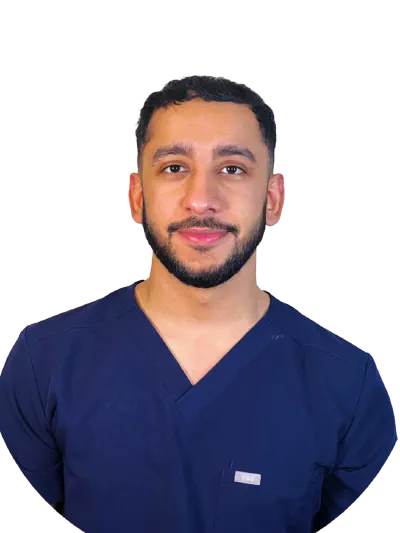
The second is who places it. Implant surgery is technical work, and a dentist who does it week in, week out has a steadier hand and a better eye for the cases that need extra care. Some practices refer the surgery out and only fit the crown; some do the whole thing under one roof. At our clinics the person who sees you at the consultation is the person who places the implant, fits the abutment and fits the crown, and for us that's Dr Zain Chishty, who plans every case on its own CBCT scan and places the implant himself.
The third is where the practice is. Rent in central London has to be recovered on every treatment in the building, and an implant carries its share. A practice in Leeds or Manchester pays a fraction of that rent, which is the honest reason the same treatment costs less in the north.
The fourth, and the one this whole page is about, is what's bundled. A low price can be perfectly honest: lower rent, more cases, everything done in-house. A high price can be honest too. The only price that's never honest is one that's low because part of the treatment has quietly been left out of it.
The Turkey Question
It comes up in every conversation about affordable implants, so here it is straight. Dental implants in Turkey really do cost around £400 to £800 a tooth, the clinics are often modern and well run, and the saving comes from genuinely lower wages and property costs. The catch is the calendar. An implant takes three to six months to fuse with the bone, and the follow-ups in that window are the part of the treatment you'd be leaving in another country, so if a healing cap loosens or the gum around it needs looking at, your dentist is a flight away and any dentist at home is picking up a case they never planned. Add the flights, the hotels and the second trip for the crown, and a good chunk of the gap quietly closes. For some people the sums still work. Just make sure the sum you're doing includes the six months after the surgery, and read the full picture in that guide before you book anything.
What Happens If an Implant Fails
Let's get this one out in the open calmly, because it's the worry underneath "is cheap safe?", and it's rarer than the forums make it feel. Implants can fail, rarely, and the question to ask any clinic is what happens then. Here's our answer, word for word from our implants page: if an implant fails in the first few months, we'll investigate why and, where clinically appropriate, replace it at cost. Once integrated, an implant is very stable, but we'll keep an eye on the gum and bone around it at every check-up to catch any problems early.
That "at cost" is the useful phrase to carry into any conversation, because it tells you the practice expects to be there in six months and in six years. A well-placed, well-looked-after implant should last twenty to thirty years, often longer, and the things that decide how long yours lasts are mostly done at your bathroom sink. If you ever want the full, unhurried version, we've written a guide to what can go wrong with an implant and what fixes it, and it's a calmer read than you'd expect.
Spreading the Cost
Plenty of people who search "cheapest" don't actually want the cheapest implant, they want a monthly number they can live with, so here's how that works with us. Any treatment above £500 can be spread over 12 months at 0%, so you pay the same total as the cash price, and 60-month plans at 12.9% APR representative are available on any amount for a lower monthly figure. The representative example is set out on our pricing page, and our guides to implant payment plans and dental finance in general walk through the sums in plain English.
Replacing More Than One Tooth
If you're missing several teeth, the arithmetic turns in your favour, because you don't need an implant for every gap. Two or three teeth in a row can often be replaced with just two implants supporting a short bridge, which saves a whole implant and leaves the teeth either side untouched, where a conventional bridge has to be carried by them. Two or more implants also come at a lower price each, listed on our implants page.
For a whole jaw, All-on-4 uses four strategically placed implants to support a full set of upper or lower teeth, and our All-on-4 offer starts at £7,999 a jaw. Our full mouth implants guide lays out the options from a single jaw to both, with the numbers side by side.
If an Implant Is Still Too Much Right Now
That's completely fine, and there are two honest alternatives. A bridge replaces one to three teeth by anchoring to the teeth either side, costs less upfront, and asks those anchor teeth to be filed down to carry it. Dentures cost the least of all and modern ones look far better than their reputation, though they need replacing every few years as the jaw slowly changes shape underneath them, which is why the lifetime comparison with implants is closer than the day-one prices suggest. On our own price list a bridge is £595 per unit and a denture is £699 per arch.
Frequently Asked Questions
What's the cheapest dental implant in the UK?
The lowest headline prices you'll see advertised are around £995 to £1,250, and those usually cover the implant on its own, with the scan, abutment and crown added later. A complete single implant realistically starts at about £1,500 in the UK, and most quotes land between £2,200 and £2,500. Ours is £1,999 with the scan, abutment, crown and follow-ups included, which is why it's the fairer number to compare against a headline.
Is a cheap dental implant safe?
It can be, because a lower price often just means lower overheads, more cases or everything done under one roof, and none of those touch the quality of what goes in your mouth. The saving to be wary of is one that comes from leaving something out: planning on a flat X-ray instead of a 3D scan, an implant system without a track record, or follow-ups that quietly cost extra. Ask exactly what the price includes, and ask what happens if the implant fails, and the answers tell you everything.
What's included in UrgentCare Dental's implant price?
The £1,999 covers the 3D CBCT scan, the planning, a premium titanium implant, a custom abutment, a porcelain or zirconium crown made at our own lab, and all the follow-ups, so the number you're quoted is the number you pay. Bone grafting, extractions and sinus lifts are quoted separately where they're clinically needed, and agreed in writing at the consultation before anything starts. The consultation itself is free: a £20 deposit holds your appointment and is refunded in full when you attend.
Why are dental implants cheaper in Turkey?
Wages, property and running costs are genuinely lower, so a clinic there can charge £400 to £800 for the same procedure, and many are modern and well run. The part the brochures leave out is that an implant takes three to six months to heal, and the follow-ups in that window happen wherever your dentist is. Add flights, hotels and the return trip for the crown, and the saving shrinks; if anything needs putting right back home, it can vanish altogether.
How much is the cheapest full mouth of dental implants?
Our All-on-4 offer starts at £7,999 a jaw. It comes out that much lower because you don't need one implant per missing tooth: four implants carry a whole arch between them, so replacing everything costs far less than replacing each tooth on its own. Our full mouth guide has the complete picture, jaw by jaw.
Can I spread the cost of a dental implant?
Yes. Any treatment above £500 can be spread over 12 months at 0%, so you pay exactly the cash price, and 60-month plans at 12.9% APR representative are available on any amount if you'd rather have a lower monthly figure. The representative example is on our pricing page, and the approval process is done in the practice at your consultation.
The Number That Matters
The cheapest dental implant in the UK is around £1,500 for a complete tooth, and the adverts below that figure are usually selling one part of it. The typical quote is £2,200 to £2,500. Ours is £1,999, with the scan, the abutment, the crown and the follow-ups inside the number, and it's the same figure at all three of our clinics: dental implants in Leeds at the Whitehall Estate in Armley, dental implants in Manchester on Broadway in Newton Heath, and our Bradford practice on Main Street in Bingley.
The real insight, though, is that the cheapest implant and the best-value implant are rarely the same thing. Best value means a fair price, yes, and also a practice close enough for the follow-ups, experienced enough to handle the odd surprise, and open enough to tell you the whole cost before you commit. A dental implant is a piece of titanium your own bone grows around, holding a tooth in place for decades, and getting it right the first time is worth everything. That you can have it done properly for £1,999, with the scan and the crown included and someone twenty minutes away for the next six months, is the genuinely remarkable part.
The number on the quote matters. What sits behind it matters more. Book a consultation and we'll put yours in writing.
Want the real number for your case?
An article can only give you a range. The £20 appointment gets you a fixed quote from a dentist who has actually looked. Extractions from £199, implants £1,999, and 0% finance on treatments over £500.
Or see every price on one page →